What is confirmed
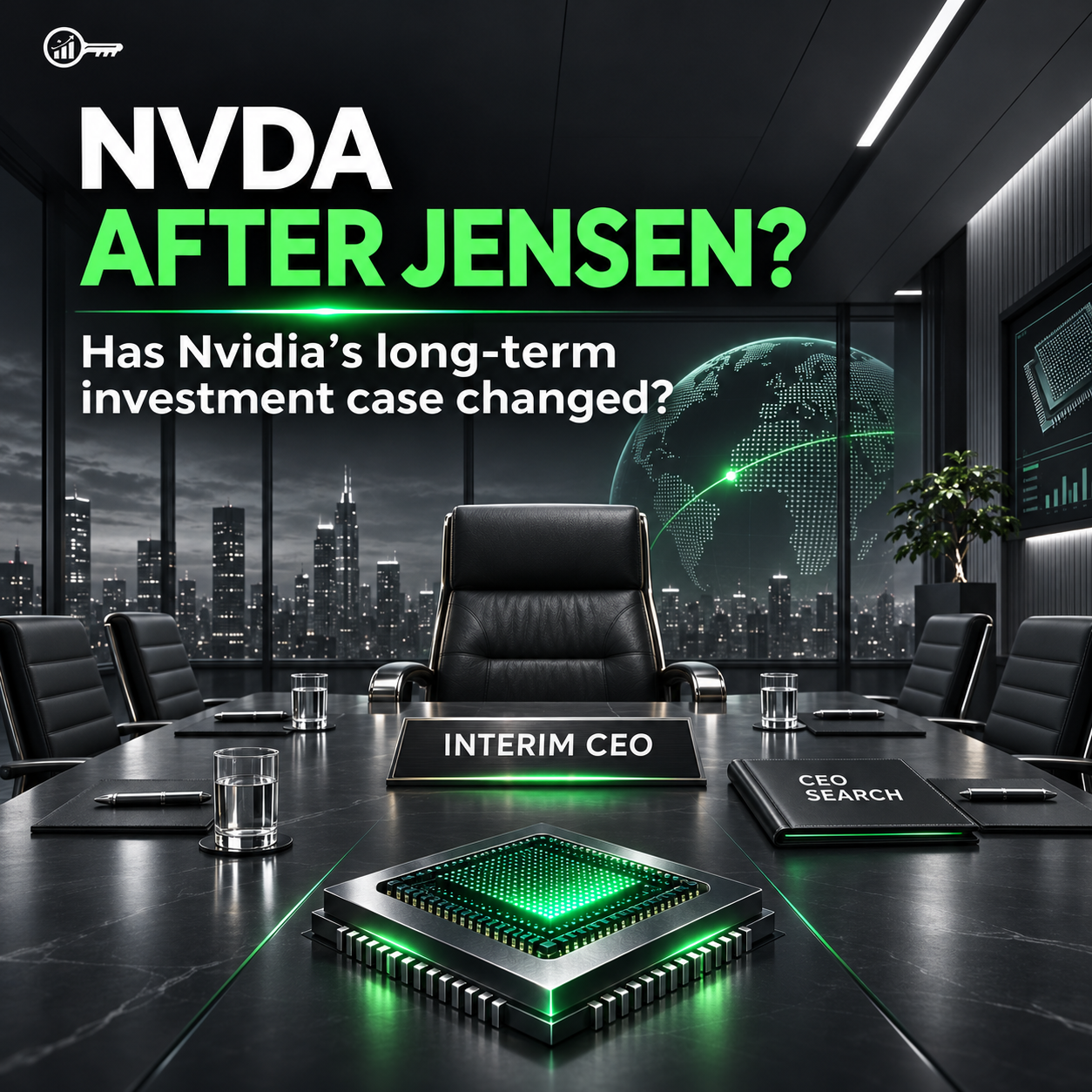
Nvidia announced that Jensen Huang resigned as president, chief executive officer and board member. The company appointed CFO Colette Kress as interim CEO and began a search for a permanent successor.
The company is not leaderless. The open question is whether a founder-led system can preserve its execution, relationships and strategic discipline through a sudden transition.
What investors should examine
1. Customer demand
Leadership changes do not automatically alter customer workloads or contracted demand. Watch revenue guidance, order commentary, customer concentration and signs of delayed or cancelled deployments.
2. Product execution
Nvidia's competitive position depends on more than one executive. The next product milestones, software adoption, supply execution and customer delivery record will show whether the operating system remains durable.
3. Management stability
Executive departures, changes in reporting lines and the permanent CEO selection will indicate whether continuity is holding or organizational risk is increasing.
4. Governance and policy exposure
Investors should separate confirmed board disclosures from allegations and speculation. Any official findings, regulatory actions or material changes to China-related policy deserve close attention.
5. Financial guidance
Margins, cash generation, capital allocation and forward guidance provide a cleaner measure of business impact than the first market reaction alone.
Current assessment
It is too early to conclude that Nvidia's long-term investment case is either intact or broken. The leadership risk is real, but the decisive evidence will come from operating performance, management continuity and official disclosures—not the drama of the headline.
What would change the picture
- Stronger: stable guidance, continuing customer demand, on-time product delivery and retention of key executives.
- Weaker: material customer delays, executive departures, roadmap disruption, adverse official findings or reduced financial guidance.